
A Canary’s Song: Antisemitism in Our “Free and Democratic Society”

Updated: Sep 26
A Canary’s Song: Antisemitism in Our “Free and Democratic Society” brought together scholars and experts in antisemitism in the Canadian context, human rights, international and domestic law, and national security for a one-day conference examining antisemitism and antizionism and their implications for liberal democracy.
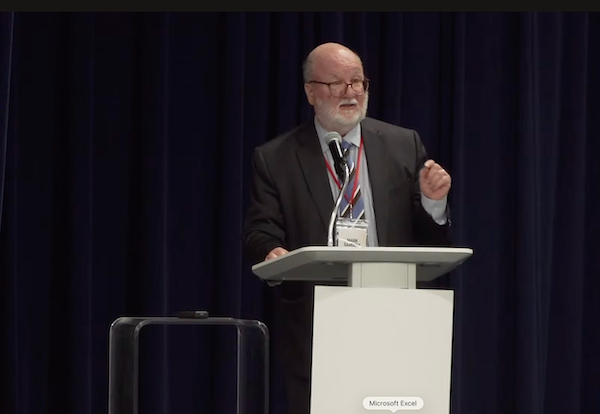
Among the discussions was a panel on Civil Liberties, Hate, Incitement & Lawfare, featuring ALCCA Chair Mark Sandler alongside Alan Kessel and Michael Geist, and moderated by The Globe and Mail Editorials Editor Patrick Brethour.
Mark Sandler on Free Expression, Hate and the Law
In his remarks, Sandler focused on the dangers of hate speech and where Canadian constitutional law and jurisprudence draw the line between protected political expression and hate, intimidation, violence, and other unlawful conduct. He emphasized that freedom of expression is fundamental to Canadian democracy, while outlining that political protest does not provide immunity for otherwise criminal behaviour.
Sandler explained that the line between protected speech and hate speech is all too frequently misunderstood or deliberately obfuscated in an attempt to shelter antisemitic hate speech under the banner of protected expression. He cautioned against distorted messaging that antisemitic hatemongers can immunize themselves from any legal accountability, however extreme their conduct, by simply substituting the word “Zionist” for “Jew” where the surrounding circumstances demonstrate that the speech is directed at Jews or Israelis as a group.
He cautioned that criticism of Israel, its policies, its government, its conduct of the war or the settler movement does not generally amount to prohibited speech, whether accurate, one-sided, distorted, ill-informed, inflammatory or deeply offensive. Objectionable or inaccurate claims should often be met with substantive responses rather than simply labelling the speaker antisemitic.
This should be distinguished from the concrete examples of conduct he listed that crosses the line into illegality: calling for the death of all Zionists (effectively a call for the death of the vast majority of Jews and Israelis); labelling all Zionists without distinction as racist, genocidal, evil or terrorists; intimidating or harassing Canadian Jews through deliberate choice of protest venues in proximity to Jewish community centres, places of worship, businesses or neighbourhoods; calling for a global intifada through armed resistance by any means necessary, when the context makes clear that the call is for the destruction of the entire State of Israel or Western society; and blocking roads, tunnels or bridges, intersections, or access to venues. The Ontario Court of Appeal recently affirmed that the mass obstruction of public highways is not a form of peaceful protest: criminal conduct is no less criminal because it occurs during an otherwise lawful protest.
Nor are educational institutions powerless to address or regulate speech that does not meet the high threshold of criminal law, when such speech is used to intimidate or harass or demonize Jews, exclude or marginalize them or prevent them from exercising their own rights in a safe and secure environment. They must make use of the tools available to them – existing codes of conduct, policies, and the ability to terminate or discipline employees who create a poisoned environment for their students. Again, he provided concrete examples of the types of activities – including those identified in Justice Benotto’s recent report on TMU – that require institutional response.
At the same time, he stressed that this approach respects the freedom to advocate for Palestinian rights and self-determination. However, this is not “a license to hold Canadian Jews collectively responsible for the events in the Middle East” or to demonize Canadian Jews for supporting Israel’s existence.
Sandler’s closing message captured the central theme of his remarks: “The robust and consistent law to combat antisemitism is not about silencing speech.” Instead, he called for nuanced responses to hate, extremism, incitement, harassment and violence, while promoting respectful dialogue, education, and a safe and secure environment for those targeted.
Watch the Conference and Read More
For more from A Canary’s Song, explore the full conference and additional reflections and coverage of the event:
Watch the full conference: A Canary’s Song: Antisemitism in Our “Free and Democratic Society”. This includes Peter Biro’s opening lecture on how Jew-hatred undercuts liberal democratic civil culture, Raheel Raza’s passionate lunchtime talk on the fight against radicalism and antisemitism, and the Honourable Irwin Cotler’s closing presentation that documents the critical turning points that have led inexorably to today’s lived experiences for Jews worldwide.
Michael Geist: A Canary’s Song: What Antisemitism Reveals About the Health of Canadian Democracy
The Canadian Jewish News: Former antisemitism czar Deborah Lyons demands the council that replaced her ‘must deliver’ soon
Holy Blossom Temple: A Canary’s Song: exploring antizionism – Toronto conference explores antizionism and how we confront it